
How Swing Case's Sealed Latch System Actually Keeps Dust Out
Truck bed toolboxes live in one of the harshest environments on your vehicle: dust from dirt roads, spray from rain, and grit kicked up by tires. A swing-out design adds one more challenge—the hinge and latch must seal consistently even as the case swings through its arc dozens of times a week.
We built our latch system to solve that problem. The sealed mechanism combines compression gasket contact, recessed striker geometry, and continuous perimeter coverage to keep dust out during daily use. Here’s how each piece works together to protect your tools.
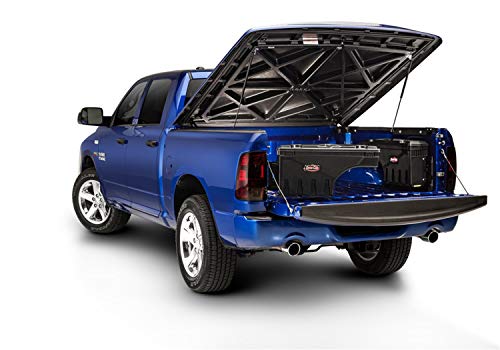
Compression Gasket Contact Around the Entire Perimeter
The primary barrier against dust is a closed-cell EPDM gasket that runs the full perimeter of the lid. When you close the latch, the striker plate pulls the lid down against the gasket with even pressure—compressing it by roughly 3mm along every inch of the seal line.
Even compression is critical. If one corner of the lid sits higher than the others, that gap becomes a dust entry point no matter how good the gasket material is. Our hinge design holds the lid parallel to the box body throughout its travel, so when the latch engages the striker the entire gasket contacts the mating surface at once.
EPDM resists UV degradation and temperature swings better than cheaper rubber compounds. After two years of sun exposure the gasket still rebounds to its original thickness, maintaining the seal rather than flattening permanently.
Recessed Striker Geometry Pulls the Lid Tight
The latch mechanism itself uses a cam-action striker that draws the lid inward as you rotate the lock cylinder. This isn’t just a hook that holds the lid closed—it’s a wedge that pulls the lid progressively tighter against the gasket as the cam rotates through its final 20 degrees of travel.
That pull-in action compensates for small variations in hinge alignment or box mounting. Even if the case is installed on an uneven bed rail, the striker’s geometry forces the lid into gasket contact at the moment of final lockdown. You can feel this as slight resistance in the last eighth-turn of the key.
The striker plate itself sits recessed 4mm below the box rim, so when the latch engages the lid is drawn below flush rather than resting on top of the seal. This creates a mechanical interlock that holds compression even when the truck bounces over rough terrain. Learn more about gasket sealing principles and compression mechanics.
No Drain Holes—The Seal Works or It Doesn't
Most swing case dust protection designs include drain holes at the bottom corners, an implicit admission that water will get inside. We don’t use them. Our latch system is designed to prevent moisture entry in the first place, not manage it after the fact.
Drain holes create their own problems. Dust and debris pack into the holes and block them, defeating their purpose. Worse, drain holes guarantee continuous air exchange with the outside—every temperature swing pulls humid air in through the top seal gaps and pushes it out through the drains, cycling moisture through your tools all day.
A true seal stops that cycle. When the gasket and latch work correctly, the air inside the case stays inside. No drain paths, no humidity exchange, no slow accumulation of road grit in the bottom of the box.

What the Seal Won't Stop—And Why That's Okay
No truck bed toolbox is waterproof in the sense of surviving full submersion. The latch system keeps out rain spray and road splash, but if you back the truck into a pond deep enough to cover the case, water will enter through the lock cylinder and hinge pivot points—neither of which can be gasketed without preventing the mechanism from moving.
Pressure washing directly into the latch seam will also force water past the gasket. The seal is designed to handle rain and splash from normal driving, not concentrated jets at close range. If you need to wash the truck bed, aim the nozzle away from the latch edge or cover the seam with your hand.
For most users this distinction doesn’t matter. Daily exposure to dust, light rain, and highway spray is what actually degrades tools over time—and that’s exactly what the sealed latch system prevents. The Undercover SC500 Swing Case Storage Box and other models in our lineup use this same latch geometry to maintain that seal across different box sizes.

Winter Performance and Gasket Flexibility
Cold weather changes how gaskets behave. Below freezing, EPDM becomes stiffer and takes longer to rebound after compression. If you open the case in subfreezing temperatures and immediately close it, the gasket may not have fully expanded back to its original thickness—leaving a temporary gap until it warms.
The solution is simple: give the gasket 10-15 seconds to recover before relatching in very cold weather. The material hasn’t failed; it just needs time to return to shape when it’s cold-soaked. Once the case is closed and latched, the compressed gasket holds its seal even at minus 20°F.
Ice formation around the lock cylinder is a separate issue. If water enters the keyway and freezes, the cylinder won’t turn and you can’t engage the latch. For a detailed walkthrough of that specific problem, see our guide on Swing Case Lock Freezing in Winter fixes.
A Seal That Works Daily, Not Just on Paper
Dust protection isn’t about exotic materials or complicated engineering—it’s about consistent gasket compression, tight latch geometry, and a design that doesn’t rely on drain holes to manage the moisture it couldn’t keep out in the first place. Our sealed latch system does exactly that.
The same principles apply whether you’re running the Undercover SC100 Swing Case Storage Box on a compact truck or a larger model on a full-size bed. Inspect the gasket twice a year, keep the striker plate clean, and the seal will keep dust out of your tools for years without constant maintenance.
Common Questions About Toolbox Seal Performance
Check the gasket every six months by running your finger along the full perimeter while the lid is open. Look for flat spots, cracks, or sections that don’t spring back when pressed.
If the gasket still rebounds and shows no visible damage, leave it alone. Replacing a gasket that’s still functional can actually reduce seal quality if the new gasket isn’t seated perfectly. Most gaskets last three to five years before needing replacement.
Yes—the latch mechanism and gasket design are identical across our models. The Undercover SC300P Black Swing Case Storage Box uses the same striker geometry and EPDM gasket as larger cases; only the box dimensions change.
Seal performance depends on proper installation and gasket condition, not the size of the case.
Don’t. Adding grease or silicone to the gasket attracts dust and creates a sticky layer that actually holds grit against the seal surface. The EPDM gasket works best clean and dry.
If you’re seeing dust intrusion, the problem is either gasket damage, uneven lid closure, or a bent striker plate—none of which sealant will fix. Inspect those components first before trying to patch the seal with additives.
Start by checking whether the lid sits flush all the way around when latched. Open the case, close it slowly, and watch each corner as the latch engages—if one side lifts or gaps, the hinge may need adjustment.
Next, inspect the gasket for flat spots or tears. Press it with your thumb; it should compress and spring back immediately. If it stays compressed, the gasket is worn and needs replacement. Finally, check the striker plate for bends or cracks—if the plate is damaged, it won’t pull the lid tight no matter how good the gasket is.
When properly latched, yes—the case is effectively airtight for practical purposes. You’ll notice this if you open the case on a hot day after it’s been closed for hours; the air inside will be warmer and staler than outside air because it hasn’t been exchanging with the environment.
That’s actually a feature for dust protection. Continuous airflow means continuous dust entry, even through small gaps. A sealed case keeps the same clean air inside all day.
Road salt doesn’t chemically attack EPDM rubber, but salt crystals can build up on the gasket surface and prevent full compression. Rinse the gasket and latch area with plain water a few times during winter to flush salt residue before it accumulates.
The latch striker is stainless steel and won’t corrode from salt exposure. If you see white buildup on the striker plate, wipe it off with a damp rag—it’s just dried salt, not rust.